Engine Bay Detailing: How to Clean Your Engine Bay Safely and Properly
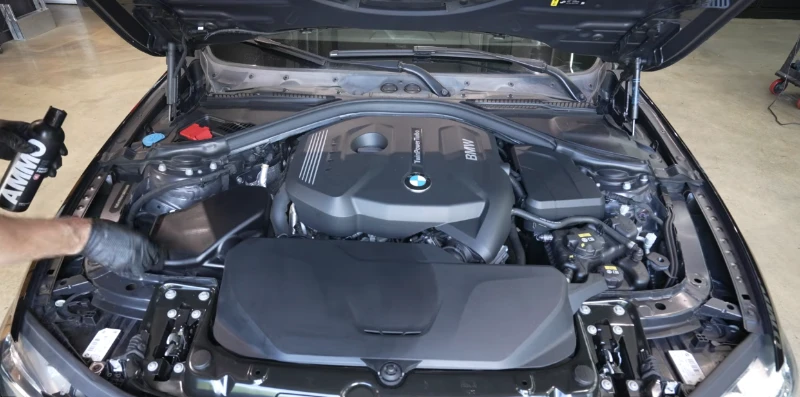
Engine bay detailing is the careful cleaning and finishing of the area under your vehicle’s hood. It removes accumulated dust, road grime, grease, leaves, oil residue, and other contamination from the engine compartment while taking precautions around electrical connections, sensors, wiring, air intakes, and other sensitive components.
A properly detailed engine bay should look clean and maintained without being excessively wet, greasy, or covered in shiny dressing. The goal is not to make the engine look artificially glossy. The goal is to remove contamination safely, dry the compartment thoroughly, and leave plastics, rubber, painted surfaces, and accessible components looking clean and cared for.
For most vehicles, engine bay detailing is safe when the engine is completely cool, water and chemicals are controlled, sensitive areas are protected, and the bay is dried properly. Automotive guidance also emphasizes avoiding direct water pressure around electrical components and using appropriate cleaners rather than harsh chemicals.
If your engine compartment is heavily soiled, has exposed wiring, aftermarket electrical equipment, or an existing mechanical problem, professional cleaning is usually the safer choice.
What Is Engine Bay Detailing?
Engine bay detailing is more thorough than simply spraying water under the hood.
A proper engine detailing service normally involves inspection, removal of loose debris, controlled application of an automotive safe cleaner, gentle agitation, careful rinsing or wiping, thorough drying, and finishing of suitable plastic and rubber surfaces.
The exact process depends on the vehicle.
A newer vehicle may have extensive wiring, sensors, electronic modules, exposed connectors, and plastic covers. An older vehicle may have brittle hoses, aging wiring insulation, accumulated oil residue, or components that are less tolerant of moisture.
That is why experienced detailers do not treat every engine compartment exactly the same way.
What engine bay detailing can include
Depending on the condition of the vehicle, the service may address:
- Engine covers
- Plastic air boxes and intake components
- Accessible painted metal
- Strut towers
- Hoses and rubber components
- Accessible brackets and hardware
- Firewall areas
- Inner fender areas
- Battery area
- Accessible fluid reservoirs
- Hood underside
- Dirt and leaves around drains
- Oil and grease residue
- Road dust and mud
- General surface contamination
The objective is controlled cleaning rather than flooding the engine compartment.
Is Engine Bay Detailing Safe?
Yes, engine bay detailing can be safe when the correct process is used.
The word “when” matters.
An engine compartment contains many components that can tolerate normal operating conditions but should not be subjected to unnecessary amounts of water, concentrated chemicals, or direct high pressure.
Before cleaning, the engine should be completely cool. Sensitive electrical components should be identified, and cleaning should be performed with controlled amounts of water and product. Drying is equally important because trapped moisture can remain around connectors and tight spaces.
Modern vehicles are generally designed to operate through rain, humidity, and normal road exposure. That does not mean every part under the hood should be aggressively sprayed.
A professional approach works with the vehicle’s design instead of testing its limits.
What areas need extra care?
Particular attention should be given to:
- Alternators
- Fuse and relay boxes
- Exposed electrical connectors
- Air intake openings
- Sensors and wiring connectors
- Battery terminals
- Aftermarket electrical equipment
- Exposed ignition components on applicable vehicles
The safest technique is to avoid directing a concentrated stream of water into these areas.
If a vehicle has damaged wiring, missing covers, exposed electrical connections, an active misfire, or another known electrical problem, cleaning should be postponed until the underlying issue has been addressed. Guidance from the Motorist Assurance Program specifically recommends avoiding engine bay cleaning when there is exposed wiring or an active misfire.
How to Clean an Engine Bay Safely
If you are wondering how to clean engine bay areas yourself, the process is less about using more water and more about controlling every stage.
1. Let the engine cool completely
Never begin by cleaning a hot engine.
Allow the vehicle to cool before applying water or cleaning chemicals. Hot surfaces can cause cleaners to dry too quickly, while sudden temperature changes can place unnecessary stress on some components.
Working on a cool engine also makes the job more comfortable and gives cleaning products more time to work properly.
2. Inspect the engine compartment first
Do not immediately reach for the hose.
Open the hood and look around the entire compartment.
Check for:
- Oil or coolant leaks
- Loose wiring
- Cracked hoses
- Missing covers
- Damaged connectors
- Exposed electrical components
- Leaves and debris
- Heavy grease deposits
- Aftermarket electronics
This inspection is important because cleaning can reveal problems that were previously hidden by dirt. A clean engine bay makes fluid leaks, damaged hoses, and other abnormalities easier to notice.
3. Remove loose debris
Use a soft brush, vacuum, or compressed air to remove loose leaves, dust, sand, and other dry debris.
Starting with dry cleaning reduces the amount of contamination that needs to be dissolved with chemicals.
It also prevents loose dirt from turning into a muddy mixture when water is introduced.
Pay attention to corners, seams, drain channels, and areas underneath the hood where leaves commonly accumulate.
4. Protect sensitive areas
Identify components that should not receive direct water or cleaning product.
Depending on the vehicle, these may include the alternator, fuse box, air intake opening, battery terminals, exposed connectors, and aftermarket electrical equipment.
Protection does not mean wrapping every component of the engine in plastic. The exact approach should depend on the vehicle and the areas being cleaned.
The purpose is simple: keep unnecessary moisture and chemical overspray away from sensitive components.
5. Apply an appropriate cleaner
Use an automotive safe degreaser or all purpose cleaner that is suitable for the surfaces being treated.
Do not assume that a stronger chemical is a better cleaner.
Heavy grease may require stronger cleaning action, but concentrated chemicals can create their own problems if they are allowed to dry on sensitive surfaces or used incorrectly.
Work in manageable sections.
Apply the product where contamination actually exists instead of soaking the entire compartment unnecessarily.
6. Agitate the contamination
This is where brushes become useful.
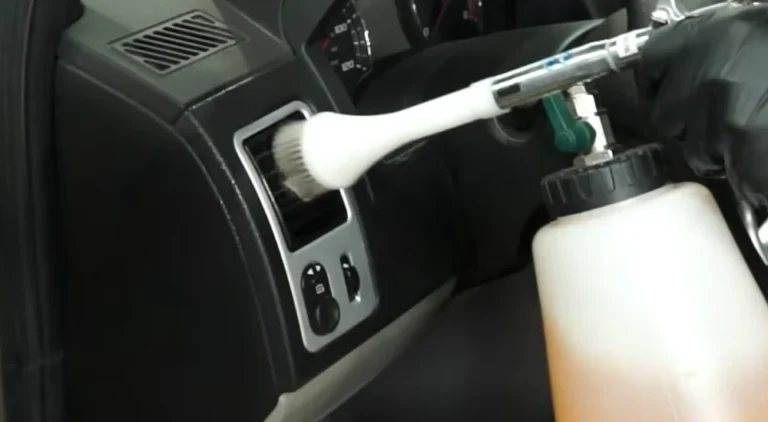
Soft detailing brushes can work cleaner into textured plastic, around brackets, along hoses, and into other areas that a towel cannot easily reach.
Agitation loosens contamination so it can be removed without relying on excessive water pressure.
Use different brush types according to the surface. A delicate electrical connector should not be treated like a heavily contaminated plastic engine cover.
The goal is to lift dirt, not attack the component underneath it.
7. Rinse or wipe carefully
After the cleaner has loosened the contamination, remove it using controlled water or microfiber towels.
Avoid concentrating water directly on electrical components.
A gentle rinse can be appropriate on suitable areas, while other sections may be better cleaned with a damp microfiber towel or controlled spray.
The amount of water required depends heavily on the vehicle and the condition of the engine bay.
Professional engine bay cleaning is not a competition to see how much water can be used.
8. Dry the engine bay thoroughly
Drying is one of the most important stages of engine detailing.
Water can remain hidden around connectors, brackets, seams, hoses, and other tight spaces long after the obvious surfaces appear dry.
A professional detailer may use an air blower or compressed air to move water out of difficult areas, followed by microfiber towels for accessible surfaces. Detailing training resources also emphasize proper drying after cleaning rather than simply closing the hood and leaving the compartment wet.
Take extra time around:
- Electrical connectors
- Seams
- Plastic housings
- Brackets
- Crevices
- Battery areas
- Tight spaces around the engine
9. Dress suitable plastics and rubber
Once the compartment is clean and dry, suitable plastic and rubber surfaces can receive a non greasy protectant.
A good finish should look natural.
Excessively glossy dressing can attract dust and leave the engine bay looking oily rather than professionally detailed.
The purpose of a finishing product is to improve the appearance of appropriate surfaces while helping maintain their condition. It should never be applied indiscriminately to belts, pulleys, brake components, electrical contacts, or other areas where a slippery residue could create a problem.
10. Perform a final inspection
Before closing the hood, inspect the entire compartment again.
Check that:
- No cleaning residue remains
- No standing water is present
- Sensitive areas are dry
- Covers are correctly positioned
- No tools or towels have been left behind
- The engine bay has a clean, natural appearance
This final inspection is what separates a controlled engine bay detail from a quick wash under the hood.
What Is the Difference Between Engine Bay Cleaning and Engine Bay Detailing?
The terms are often used interchangeably, but there is a practical difference.
Engine bay cleaning primarily focuses on removing dirt, grease, dust, and debris.
Engine bay detailing takes the process further by paying attention to individual surfaces, difficult areas, drying, finishing, and overall presentation.
| Engine Bay Cleaning | Engine Bay Detailing |
|---|---|
| Removes dirt and grime | Cleans and refines the entire accessible compartment |
| Focuses on basic cleanliness | Focuses on cleanliness and presentation |
| May involve simple wiping or rinsing | Uses controlled cleaning, agitation, drying, and finishing |
| Limited surface treatment | Appropriate plastics and rubber may be dressed |
| Basic maintenance cleaning | More thorough appearance focused service |
For a vehicle being prepared for sale, a special event, a collection, or a complete detail, engine bay detailing can make more sense than a basic engine compartment wash.
Why Should You Detail Your Engine Bay?
A clean engine compartment is not only about appearance.
Easier leak detection
Heavy dirt and oil residue can hide fresh fluid contamination.
Once the area is clean, new oil, coolant, or other fluid residue can be easier to identify.
That does not mean engine bay detailing repairs a leak. It simply makes visual inspection easier.
Better overall presentation
A beautifully detailed exterior can lose some of its impact when the hood is opened and the engine compartment is covered in years of grime.
For someone selling or trading a vehicle, the condition under the hood contributes to the overall impression of how the vehicle has been maintained.
Some local detailing providers specifically position engine bay cleaning as a service that improves presentation and makes maintenance checks easier.
Easier maintenance
Clean surfaces are easier to inspect and work around.
Reading fluid levels, checking hoses, inspecting clamps, and looking for leaks becomes less frustrating when thick grime is not covering everything.
Removing accumulated contamination
Road dust, oily residue, leaves, mud, and other contamination can accumulate under the hood over time.
Removing that buildup keeps the compartment cleaner and prevents the engine bay from becoming progressively harder to maintain.
Better preparation for selling a vehicle
A clean engine bay can complement a properly detailed exterior and interior.
It should not be used to disguise mechanical problems. In fact, cleaning should make legitimate maintenance issues easier to see.
That distinction matters when preparing a vehicle for sale.
How Often Should You Clean Your Engine Bay?
For most daily driven vehicles, engine bay cleaning once or twice a year is a reasonable starting point.
There is no universal schedule because driving conditions matter.
You may need more frequent cleaning if you:
- Drive on dusty roads
- Regularly travel through mud
- Park under trees
- Drive off road
- Live in an area with heavy seasonal contamination
- Frequently transport pets or outdoor equipment
- Notice significant buildup under the hood
A lightly driven garage kept vehicle may need less frequent attention.
A daily driver exposed to dust, rain, mud, and road grime may benefit from more regular maintenance.
The important point is not to clean the engine bay simply because a calendar says it is time. Inspect the condition first and clean when contamination has accumulated enough to justify the work.
When Should You Not Clean Your Engine Bay?
There are situations where cleaning should wait.
The engine is hot
Let it cool first.
There is exposed wiring
Damaged wiring should be addressed before introducing water.
The vehicle has an active electrical problem
If the car is already experiencing warning lights, electrical faults, or unexplained misfires, engine bay cleaning is not the first step.
Diagnose the problem first.
There is a major fluid leak
Cleaning can remove evidence that helps identify where a leak is coming from.
If you discover a substantial leak, mechanical inspection should take priority.
You are about to take a long drive
Give the compartment enough time to dry thoroughly before putting the vehicle through normal operation.
Can You Pressure Wash an Engine Bay?
This is one of the most common questions about engine detailing.
The safest answer is that high pressure should not be used indiscriminately around an engine compartment.
Some professional detailers may use controlled pressure equipment with appropriate technique, distance, spray pattern, and vehicle specific precautions. Other professionals prefer low pressure water, pump sprayers, or targeted wiping because it provides greater control.
The important issue is not whether a machine is technically capable of spraying water. The issue is where that water is directed and how aggressively it is delivered.
Direct high pressure around connectors, sensors, fuse boxes, wiring, and other sensitive components can force water into places it was never intended to enter.
For a DIY owner, controlled low pressure is the more conservative approach. Automotive guidance consistently emphasizes avoiding direct water pressure on sensitive electrical areas.
What Should You Never Spray Directly?
Avoid deliberately directing concentrated water or cleaner into:
- Electrical connectors
- Fuse boxes
- Open air intake systems
- Alternators
- Exposed wiring
- Battery terminals
- Sensors
- Aftermarket electronics
The exact layout differs from vehicle to vehicle, so a generic diagram cannot replace inspecting the actual engine compartment.
This is particularly important with modified vehicles where aftermarket intakes, wiring, audio equipment, remote starters, lighting systems, or other accessories may have been installed.
Common Engine Bay Detailing Mistakes
Many engine bay cleaning problems happen because the process is rushed.
Cleaning a hot engine
This is one of the easiest mistakes to avoid.
Wait until the engine is completely cool.
Using too much water
More water does not automatically mean a cleaner engine.
Controlled application is safer and usually more efficient.
Spraying everything with degreaser
A degreaser should be used according to the condition and material being cleaned.
Oversaturating an entire engine bay with strong chemical cleaner is unnecessary.
Scrubbing everything with a stiff brush
Different materials require different levels of agitation.
Aggressive brushing can damage delicate surfaces, aged rubber, labels, or wiring insulation.
Ignoring drying
A compartment can look clean while still containing trapped moisture.
Take time to dry it properly.
Using greasy dressing
An overly oily finish can attract dust and create a messy appearance.
A professional engine detail should look clean and natural rather than wet and slippery.
Cleaning over an existing mechanical problem
Detailing is not mechanical repair.
If you discover damaged wiring, a serious leak, broken components, or an electrical fault, stop and address the mechanical issue.
DIY Engine Bay Cleaning vs Professional Detailing
DIY cleaning can work well when the engine bay is lightly contaminated and the owner understands the risks.
Professional detailing becomes more attractive when the vehicle is heavily soiled or when the owner is uncomfortable working around electrical components.
| DIY Cleaning | Professional Engine Bay Detailing |
|---|---|
| Lower direct cost | You pay for equipment, experience, and labor |
| Requires your own tools | Professional tools are already available |
| More time intensive for beginners | More efficient for experienced detailers |
| Greater chance of using the wrong technique | Process is based on vehicle condition |
| Good for light maintenance | Better suited to heavy buildup and presentation |
| You handle the safety assessment | Detailer performs inspection and controlled cleaning |
The biggest advantage of professional engine bay detailing is not simply having someone make the compartment look clean.
It is having someone who understands where cleaning should be aggressive and where it should be restrained.
How Much Does Engine Bay Detailing Cost?
Engine bay detailing prices vary by vehicle size, condition, location, contamination level, and whether the service is offered as an individual service or an add on to a complete detail.
A lightly dusty engine compartment takes considerably less work than one covered in years of oil residue and road grime.
Some Bowling Green area detailers advertise engine bay cleaning as an add on or separate detailing service, but pricing varies between providers and vehicle conditions.
When comparing prices, ask what the service actually includes.
A low price may represent basic cleaning, while a more comprehensive service may include:
- Engine compartment inspection
- Degreasing
- Brush agitation
- Controlled rinsing
- Compressed air drying
- Microfiber drying
- Plastic and rubber finishing
- Final inspection
The cheapest option is not necessarily the best value if the process is rushed or overly aggressive.
What Does a Professional Engine Bay Detailing Service Include?
A quality service should have a clear process rather than simply spraying cleaner and water under the hood.
A typical professional approach looks like this:
Inspection
The technician checks the condition of the engine bay before cleaning.
Dry debris removal
Leaves, dust, sand, and loose contamination are removed first.
Component protection
Sensitive areas are identified and protected where necessary.
Controlled cleaning
Appropriate automotive cleaners are applied to contaminated surfaces.
Agitation
Detailing brushes are used to loosen stubborn grime without unnecessarily scrubbing delicate components.
Controlled rinsing
Cleaning residue and loosened contamination are removed without aggressively targeting sensitive electrical areas.
Air and towel drying
Water is removed from crevices and accessible surfaces.
Surface finishing
Suitable plastics and rubber surfaces may receive a natural looking protectant.
Final inspection
The compartment is checked before the vehicle leaves the service area.
That process gives the customer more than a visually cleaner engine. It provides a controlled approach designed around the condition and construction of the vehicle.
Engine Bay Detailing in Bowling Green, KY
Vehicles in Bowling Green deal with the same everyday sources of under hood contamination found throughout Kentucky, including road dust, rain, mud, seasonal debris, and grime picked up during regular driving.
If you frequently travel through rural roads, construction areas, muddy conditions, or heavily trafficked routes, contamination can build up under the hood faster than you may notice.
Engine bay detailing can be particularly useful before:
- Selling or trading a vehicle
- Listing a vehicle for private sale
- Attending a car show
- Completing a full exterior and interior detail
- Applying a broader vehicle appearance package
- Restoring the appearance of an older vehicle
- Preparing a collector or enthusiast vehicle for display
Local Bowling Green detailing providers already include engine bay cleaning or engine detailing among their broader vehicle care services, which shows that the service is increasingly treated as part of complete vehicle presentation rather than an unusual specialty.
How to Get the Best Results From Engine Detailing
The best engine bay results usually come from restraint.
You do not need to make every surface wet.
You do not need the strongest degreaser.
You do not need the highest pressure.
You do not need an extremely glossy dressing.
Instead, focus on four things:
Control: Apply water and chemicals only where needed.
Protection: Identify sensitive components before cleaning.
Agitation: Let appropriate cleaners and brushes do the work instead of relying on pressure.
Drying: Remove moisture thoroughly before considering the job finished.
That approach produces a cleaner engine bay while reducing unnecessary risk.
Explore More Guides
Frequently Asked Questions About Engine Bay Detailing
Yes, when performed correctly. Modern vehicles have extensive electronics, so cleaning should be controlled rather than aggressive. The engine should be cool, sensitive areas should be protected or avoided, and the compartment should be dried thoroughly.
Water can cause problems if it is forced into sensitive electrical components, connectors, air intake openings, or damaged wiring. Normal vehicle operation exposes many components to moisture, but unnecessary high pressure or flooding should still be avoided.
For many vehicles, once or twice a year is sufficient. Vehicles exposed to dust, mud, off road conditions, or heavy contamination may need more frequent cleaning.
A pressure washer should not be aimed directly at sensitive components. If pressure equipment is used, it requires careful control, appropriate distance, and an understanding of the vehicle’s layout. For DIY cleaning, a gentle water source provides more margin for error.
Yes, if it is done properly. A clean engine compartment improves presentation and makes legitimate leaks and maintenance issues easier to identify. It should never be cleaned to conceal an existing mechanical problem.
Engine bay detailing is primarily a cleaning and appearance service. It does not repair mechanical problems or automatically improve engine performance. Its practical benefits include easier visual inspection and removal of accumulated contamination.
It can remove surface oil residue and grease when appropriate automotive cleaners are used. Heavy or recurring oil contamination may indicate an active leak that needs mechanical diagnosis rather than repeated cleaning.
It depends on the detailer’s package. Some businesses include it in higher level detailing packages, while others offer engine bay cleaning as an add on. Always ask what the package includes before booking.
In detailing terminology, the two phrases are often used for the same general service. Engine bay detailing more accurately describes cleaning the accessible compartment surrounding the engine rather than servicing the engine mechanically.
Do not immediately introduce water. Exposed or damaged wiring should be inspected and repaired first. Cleaning around an electrical problem can create unnecessary risk.
The Bottom Line
Engine bay detailing is not about making the compartment shiny at any cost.
A good detail removes accumulated grime, improves visibility, makes maintenance checks easier, and restores a cleaner factory style appearance while respecting the sensitive components under the hood.
The safest process starts with a cool engine and a careful inspection. Loose debris is removed before cleaning, appropriate products are applied selectively, brushes provide controlled agitation, water is used carefully, and the entire compartment is dried before finishing.
For a lightly dirty engine bay, an experienced owner can handle the work with the right tools and patience. For heavily contaminated vehicles, older vehicles with fragile wiring, modified cars, or anyone who is uncomfortable working around electrical components, professional engine bay detailing is the better option.
If your vehicle is being prepared for sale, a complete detail, or simply needs attention under the hood, engine bay cleaning can be a worthwhile part of the overall vehicle care process. The difference is not how much water or cleaner is used. The difference is using the right amount, in the right place, with the right technique.