Touchless Car Wash in Bowling Green, KY (2026)
Honestly if you live in Bowling Green, a dirty car is just part of life.
Take one run up I-65. Sit behind a couple of trucks. Catch some construction dust around Scottsville Road. By the time you get back, the rear hatch is gray. Then spring shows up and pollen season begins like someone’s repainting your car yellow every week. And winter? Kentucky doesn’t go heavy on road salt like the northern states, but when roads are treated and it’s slushy out, your rocker panels and undercarriage still take a beating.
That’s exactly why touchless car washes are blowing up here. People want a clean car without turning it into a Saturday project.
This guide is for anyone searching “touchless car wash Bowling Green KY“ who wants to know:
- Which place to actually use
- What it should cost in 2026
- How to avoid that frustrating situation where you paid and your car looks exactly the same
First Things First: What Is a Touchless Car Wash?
It’s simple.
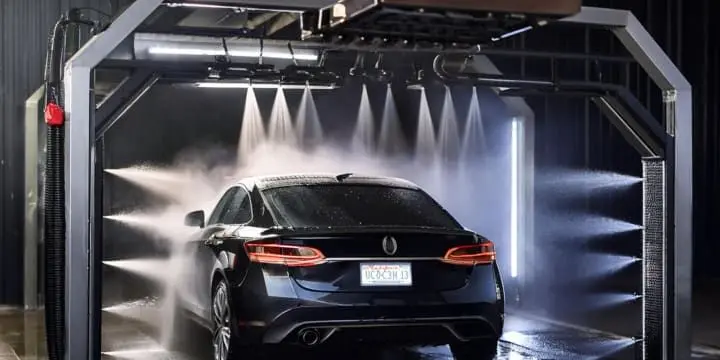
A touchless wash uses no brushes and no cloth on your car. Just high-pressure water, special detergents, and a rinse that’s the whole thing.
But understand this: touchless isn’t magic.
If there’s thick mud packed into your wheel well, or bugs baked onto your bumper from a night drive on I-65 one pass probably won’t get it all. Sometimes you need a second wash, or a little manual prep first.
Touchless is best for regular maintenance the light to moderate grime that builds up every week or two.
When Touchless Works — And When It Doesn’t
It works great for:
- Normal road film and dust
- Pollen season (Bowling Green spring = yellow car, guaranteed)
- Rain spots and dust after a storm
- Salt mist and slush residue in winter
It struggles with:
- Clay mud the chunky, thick kind
- Bugs baked on after a long highway drive
- Heavy salt crust after a winter road trip
- Paint that’s already heavily oxidized or failing
If you’re dealing with any of those, touchless can still help but expect either a second pass or an occasional hand wash too.
Touchless vs. Soft-Touch vs. Hand Wash The Real Differences
All the “premium” and “ceramic” marketing makes this confusing. Let’s keep it simple.
Touchless
Nothing physically touches your paint. Water and chemistry do all the work.
Why people love it: Lowest risk of swirl marks and micro-scratches. Perfect for newer paint, ceramic coatings, or PPF.
The catch: If the chemistry is weak or the cycle is too fast, the car feels “rinsed” rather than clean. Lower door panels can still look grimy.
Soft-Touch (brush or cloth)
Physically scrubs your paint.
Why people love it: Gets stubborn grime that touchless misses.
The catch: If equipment is worn or dirty, you get micro-scratches. They don’t show up the day you wash they show up in sunlight later. And once you see them, you can’t unsee them.
Hand Wash and Detailing
Someone washes it by hand with proper mitts, multiple buckets, drying, and protection or you do it yourself.
Why people love it: Best results, period. Bug splatter, wheels, door jambs everything gets attention.
The catch: It costs more time and money. Worth it for show cars, pre-sale prep, or when you need it to look perfect for an event.
Simple rule of thumb: Touchless for weekly maintenance. Hand wash for occasional deep cleans.
Notes for Specific Vehicles:
| Vehicle Type | What to Watch |
|---|---|
| Matte paint | Avoid shine-enhancing products |
| PPF | Don’t blast wand too close to edges |
| Ceramic coating | Avoid overly harsh detergents |
| Lifted truck / roof rack | Check height limits before entering |
| Electric vehicle | Avoid spraying near charging port and seals |
| Older clear coat | Any wash will reveal issues — that’s not the wash’s fault |
How a Good Touchless Wash Actually Works
A quality touchless wash is essentially a chemical process the water pressure is just the delivery system.
That’s why two “touchless” locations can feel completely different.
The typical cycle at a good in-bay touchless:
- Pre-soak — loosens traffic film, pollen, oil, and road grime
- High-pressure rinse — knocks off what was loosened
- Soap or foam application — breaks dirt down further
- Wheel and rocker blast — extra attention on the dirtiest areas
- Spot-free rinse — reduces mineral deposits so you don’t get spots
- Wax or sealant (optional) — helps future washes work better
- Drying — blowers, sometimes longer on higher packages
The most important thing: Chemistry
Even with high pressure, if the pre-soak is watered down or dwell time is too short results will disappoint. That’s the classic feeling: shiny for 10 minutes, then you realize the lower panels are still dirty.
Water quality matters more than you’d think
Bowling Green summers are hot. Water spots show up fast. A true spot-free rinse using RO or deionized water makes a real difference especially if you can’t towel dry right away.
Drying: decent, but not perfect
Touchless typically leaves more droplets than soft-touch because nothing physically wipes the water off. That’s normal. A sealant step helps water bead up and blow off more easily, and some locations simply have better blower placement than others.
Signs a Wash Is Well-Run — Check Before You Pay
- Bay is clean — not slimy, not full of trash
- Smells neutral or clean — not sour and stale
- Signage is clear and not held together with tape
- Nozzles look maintained — not clogged or crooked
- Card reader and tap-to-pay actually work
- If something goes wrong, there’s a real number to call
One simple rule: If the place looks neglected, the chemistry and maintenance are almost always neglected too.
What Touchless Car Washes Cost in Bowling Green in 2026
Single wash prices:
| Package | Price | What You Get |
|---|---|---|
| Basic | ~$9–$12 | Pre-soak, rinse, basic soap, basic dry |
| Mid-tier | ~$13–$18 | Better wheel focus, spot-free rinse, better dry cycle |
| Top-tier | ~$19–$26 | Underbody wash, sealant, triple foam, longer dry time |
What actually improves as you go up:
- More dwell time not just more foam
- Underbody rinse (especially important in winter)
- Better rinse quality and protection steps
- Longer drying cycle
Memberships and Unlimited Plans
Makes sense for:
- Daily I-65 commuters
- Rideshare and delivery drivers
- Families with multiple vehicles
- Anyone washing weekly
Doesn’t make sense for:
- People who wash once a month or less
- People who only wash when the car gets embarrassing
Quick math: If a membership is $30–$45/month and a mid-tier single wash is $15, you need 2–3 washes monthly before it pays off. Run the numbers before you sign up and forget about it.
Hidden Costs to Watch For
- Vacuum tokens
- Mat cleaners
- Microfiber towels from the vending machine
- Air fresheners
- Bug prep stations that charge extra
- “Premium bays” with higher per-minute pricing
Price-to-quality red flags:
- Very cheap “touchless” that’s basically just a rinse and quick soap you’ll feel it
- Very expensive packages that add dramatic foam colors but skip underbody or dwell time
How to Pick the Best Touchless Wash in Bowling Green Quick Checklist
1. Convenience wins
Pick something near your actual routes not your ideal life, your real one.
Think about:
- I-65 exits you use regularly
- US-31W corridors
- Scottsville Road runs
- Campbell Lane errands
- Downtown and WKU campus loops
The best wash is the one you’ll actually use consistently.
2. Confirm it’s truly touchless
Look for “no brushes” and “no cloth.” If you can, watch a car go through. If you see hanging cloth at the end it’s not touchless. It might be gentle, but it’s not touchless.
3. Hours and wait times
- 24/7 self-serve touchless wands: Great for odd hours, quick rinses, and targeted bug prep
- In-bay automatics: Fast, but can back up during peak times
Best time to go: Weekday mornings or mid-afternoon when school and commute traffic is quieter.
4. Payment and reliability
In 2026, you shouldn’t be fighting a broken card reader. Look for:
- Tap-to-pay that actually works
- App support if they offer it
- License plate recognition for memberships
- A clear refund or help process posted on site
5. Safety for your specific vehicle
Check posted limits for height, width, wide mirrors, roof racks, bike racks, and lifted trucks. If you’re borderline don’t guess. Choose a self-serve bay or a location with clearly posted limits.
Local Options Framework for Bowling Green
There’s no single “perfect” place for everyone and locations change. Equipment gets upgraded. Management changes. A great spot last year can be rough this year.
So instead of a hard ranking, here’s how to classify what you find on Google Maps when you search “touchless car wash Bowling Green KY”:
1. Standalone Touchless Automatic (In-Bay)
Best for: Consistent maintenance washes, quick in-and-out.
Pros: Usually the most genuine touchless experience. Clear cycle steps. Often includes underbody and spot-free options.
Cons: Can struggle with heavy bugs and caked mud. Drying is decent, rarely perfect.
Check before paying: How long is the cycle? If it’s done in under 3 minutes, it was rushed. Is underbody rinse available? Is spot-free actually functioning?
2. Gas Station Touchless
Best for: Quick wash while fueling up. Pure convenience.
Pros: Easy stop if it’s on your route. Often open long hours.
Cons: Some are great. Some are basically a rinse with a little soap. Equipment maintenance can be hit or miss.
Check: Do reviews mention “didn’t clean” or “spots” repeatedly? Does the payment system work?
3. Self-Serve Bays (High-Pressure Wand)
Best for: Targeted cleaning, bug prep, wheel wells, lifted trucks, vehicles with roof racks.
Pros: You control the pressure and where it goes. Great for blasting salt and slush from areas you can reach.
Cons: Easy to accidentally force water into seals if you’re not careful. You still have to do the work.
One important note: If you bring a towel, it needs to be genuinely clean. A gritty towel creates the exact scratches you were trying to avoid.
4. Hybrid Sites (Touchless + Soft-Touch)
Best for: Drivers who want options depending on how dirty the car is.
Pros: Go touchless most of the time, soft-touch when you need more cleaning power.
Cons: Some hybrids call everything “touchless” in their marketing even when the tunnel uses cloth.
How to verify: Look for a specific “touchless in-bay” lane. Watch a cycle go through. If anything touches the paint, it’s not touchless.
Use reviews smartly — search within them for patterns: “spots,” “scratches,” “didn’t clean,” “equipment down,” “membership cancellation.” One angry review is normal. Ten saying the same thing is a real signal.
The Right Package for Bowling Green’s Seasons
You don’t need the top package every time. You need the right package for the season.
Spring Pollen
Prioritize:
- Strong pre-soak
- Spot-free rinse
- A sealant add-on helps pollen sticks less to protected paint
If your car lives outside in spring, a little protection goes a long way.
Summer Bugs (Especially Highway Driving)
Drive I-65 a lot? Bugs are the enemy.
- Choose a wash with longer dwell time
- Use the bug prep station if one is available
- Sometimes a quick manual pre-pass on the bumper is worth it
That one extra minute makes touchless work dramatically better on bug-heavy fronts.
Fall Road Film
Usually the easiest season. Mid-tier is plenty.
Winter Salt and Slush
Underbody rinse becomes non-negotiable.
- Always choose a package that includes underbody
- Wash more frequently after winter storms even if the car doesn’t look that dirty
The rocker panels and undercarriage are where winter damage quietly starts. A regular winter rinse habit is a lot cheaper than rust repair later.
Parking Situation Matters Too
If you park outside: Add a sealant or wax step more often. It makes future touchless washes more effective because dirt releases more easily and water beads off better.
Simple Habits for Better Results
60-second pre-check before pulling in:
- Close windows and sunroof
- Fold mirrors if the signage suggests it
- Remove loose items from truck beds
- Make sure the antenna is secured or compatible
- Loose trim piece? Pick a self-serve bay instead
Use bug prep if it’s there:
Hit the front bumper, mirrors, windshield edges, and lower rocker panels. Let it sit for a moment. Don’t rush it.
After-wash quick finish:
- Drive a few minutes to blow water out of crevices
- Optional: wipe remaining droplets with a clean microfiber
When to do a second pass:
- After muddy backroads
- After heavy salt exposure
- After long highway drives during bug season
Sometimes two mid-tier passes beat one expensive top package especially when the top package is mostly foam theater.
Common Myths And What’s Actually True
Myth: Touchless never scratches. Truth: It greatly reduces risk since nothing scrubs the paint. But dirty towels, dirty vacuum nozzles, or wiping a gritty panel dry can still scratch. Be careful after the wash too.
Myth: More foam equals more clean. Truth: Dwell time, chemistry strength, and rinse quality matter far more than colorful foam. The foam is mostly for show.
Myth: Touchless is bad for wax or ceramic coatings. Truth: Harsh chemicals can slowly reduce some protective products over time. But a reputable wash plus occasional reapplication is a completely normal, manageable routine. Many ceramic-coated cars are maintained exclusively with touchless washes.
Myth: Spot-free rinse means zero spots. Truth: It reduces mineral spotting significantly. But if it’s blazing hot and water bakes onto the surface before you can dry it, some spots can still appear.
Myth: One package fits all seasons. Truth: Bowling Green’s seasons change what you actually need. Winter = underbody. Spring = pollen and spot-free. Summer = bug prep focus.
Simple Decision Guide — What Should You Pick Today?
| Your Situation | What to Do |
|---|---|
| Coated or newer paint, wash often | Basic or mid-tier + spot-free. Add sealant roughly monthly. |
| Genuinely dirty car (mud, salt, bugs) | Mid or top-tier with underbody. Expect a possible second pass — that’s normal. |
| Want “perfect” results for an event | Touchless first, then a clean microfiber + detail spray. Or book a local detailer for a one-off deep clean. |
| Budget is tight | Find the cleanest, best-maintained basic touchless near your route. Wash more consistently rather than overpaying once and waiting six weeks. |
Touchless is the safest, lowest-effort option for most Bowling Green drivers. Pick a well-maintained wash, choose the package that matches the season, and your car stays clean without losing half your weekend to it.
FAQs
A touchless car wash cleans your vehicle using only high-pressure water and detergents no brushes or cloth ever touch your paint. It’s popular in Bowling Green because it minimizes scratch risk while effectively handling the area’s common conditions: pollen, road dust, and winter slush.
Bowling Green drivers rack up a lot of highway miles commuters, WKU students, families on sports schedules. The city is also a hub between Nashville and Louisville, meaning lots of road time. That combination creates regular light-to-moderate grime exactly what touchless handles best.
Touchless = no contact, lowest scratch risk, but can miss heavy grime. Soft-touch = physical scrub, cleans more aggressively, but higher scratch risk if equipment isn’t maintained. Hand wash = best possible results, but requires the most time and money.
Best strategy: touchless for regular maintenance, hand wash occasionally for deep cleans.
Touchless is excellent for road film, pollen, dust, salt mist, and slush. It can struggle with heavy clay mud, baked-on bugs, thick salt crust, or heavily oxidized paint. In those cases, a second pass or some manual prep beforehand will help a lot.
Yes. Matte paint avoid shine products. PPF don’t blast edges with a close wand. Ceramic coatings stick to gentler detergents for maintenance. Lifted trucks and roof racks always check posted height limits. Electric vehicles avoid spraying directly into charging ports or door seals.
Roughly: Basic ~$9–$12, Mid-tier ~$13–$18, Top-tier ~$19–$26. Monthly unlimited memberships typically run $30–$45. Always confirm current pricing directly with the location since these can shift.