Car Paint Restoration Tips for a Like-New Finish in bowling green KY
Weather in Bowling Green, Kentucky tests vehicles throughout the year. Heat lingers through summer months, yet shifts arrive without warning. Exposure leads to gradual deterioration over time. Maintaining appearance serves protection far beyond surface appeal. Condition preservation reduces risk of long-term structural harm.
A well-maintained finish begins with expert restoration work. As a result, long-term protection of the clear layer becomes achievable. Great appearance follows naturally when care is consistent. Value remains strong under such conditions. Shiny results like those at dealerships are possible even at home. Step-by-step methods reveal paths to that outcome. Procedures fit within typical garages without special setups.
For those who drive only on weekends – or perhaps are newer to vehicle care – understanding how to restore car paint matters greatly. Rain or shine in Kentucky, such knowledge supports the lasting appearance of any automobile.
Key Takeaways
- Understand how local weather patterns impact your vehicle’s exterior finish.
- Learn why proactive maintenance is vital for long-term clear coat protection.
- Discover how professional techniques enhance your vehicle’s overall resale value.
- Follow a simple, step-by-step roadmap for achieving a showroom-quality shine at home.
- Identify the best tools and products to keep your finish looking like new.
Understanding the State of Your Vehicle Paint
Beginning at the point of auto paint renewal involves an initial inspection of the vehicle. Such a move supports clearer decision paths ahead. Safety remains steady through it, appearance improves just the same.
Identifying Common Paint Defects
Begin by identifying the issue affecting your paint surface. Oxidation may be present if the vehicle appears faded. Swirl marks often show up under sunlight – these are fine scratches caused by improper cleaning methods.
Even minor damage from surroundings happens often. When found quickly, repairs to the surface become more accurate. Because of this timing, selecting proper equipment follows naturally.
Assessing Damage Levels Before Starting
Some paint issues differ in how they must be handled. Whether a gentle polish suffices often depends on what the surface reveals. A minor flaw could respond well to minimal effort – using only a fine compound with care. Deep imperfections may demand more precise methods instead.
Yet careful attention matters most for deeper marks. These flaws could require expert help or unique approaches instead. Protection of the vehicle’s finish begins with the mildest solution available. A softer start prevents further harm unexpectedly.
Essential Tools and Supplies for Car Paint Restoration
One detail often overlooked: proper materials restore a vehicle’s appearance effectively. Without suitable equipment, imperfections like fine scratches may appear more easily. A thoughtful selection leads to improved results in the end.
Selecting the Best Paint Restorer for Cars
Some substances differ greatly in effect. Depending on the vehicle’s finish type, selection shifts accordingly. A gentle polishing agent handles surface-level wear effectively. When damage reaches deeper layers, intensity must increase too.
One should verify the label before applying any substance. Using an appropriate car paint restorer reduces effort while shielding the surface layer. Begin treatment using a mild formula whenever possible.
Must-Have Microfiber and Polishing Pads
Just like the substances applied, equipment choice holds equal weight. Towels made of gentle microfiber avoid harming surfaces while shining. Each phase of renewal requires its own pad type.
A selection of necessary items appears below. Among them sit practical choices for everyday tasks. One finds usefulness in simple designs. Each serves a purpose without excess.
Here are some tools you should have:
- Microfiber towels: Choose high-GSM towels for a scratch-free clean.
- Cutting pads: These pads remove heavy oxidation and deep scratches.
- Polishing pads: Use these for refining the finish and adding gloss.
- Finishing pads: These are great for applying glazes or sealants to keep the shine.
Keep your pads clean and replace them when needed. This ensures a consistent finish. Investing in these essential supplies makes your project easier and more rewarding.
Want to learn how professionals remove scratches and swirl marks? Read our detailed guide on Paint Correction Process.
Preparing Your Vehicle for the Restoration Process
Before touching a buffer, prepare the panel properly. Dirt-free means safer polishing later. Mistakes here risk harming the outer layer of paint.
Deep Cleaning and Decontamination Techniques
deep cleaning and decontamination methods
Most grime does not come off through washing alone. Tar, sap, and metal particles remain bonded to surfaces despite regular cleaning. A proper automotive detergent becomes necessary at this stage. The application follows using a dedicated wash mitt for safe results.
Once cleaned, apply a substance that dissolves metallic contaminants left by brakes or trains. Tiny fragments may create roughness across the surface. Removing them fully allows smoothing procedures to work with less risk. The finish responds better when interference is gone.
Clay Bar Treatment for a Smooth Surface
Smoothness follows once the clay bar passes over the cleaned surface. Trapped particles remain even after washing; these vanish under gentle pressure. Only when such contaminants are gone does polishing become effective. Preparation of this kind supports what comes next in paint correction work.
Here’s how to get a smooth finish:
- Lubricate generously: Use a clay lubricant or quick detailer spray to avoid marring the paint.
- Work in small sections: Clean one panel at a time, using light pressure and overlapping passes.
- Fold the clay: Fold the clay bar often to reveal a clean side as it picks up dirt.
- Check the surface: Use your fingertips to feel if the paint is smooth before moving on.
By preparing your vehicle right, you set up a perfect canvas for restoration. This care prevents scratches and makes your work look professional and lasting.
Mastering the Art of Car Paint Restoration
Start by gently rubbing the surface when altering your vehicle’s appearance. A high-quality paint finish comes through slow effort, precise control, and understanding product reactions with the clear layer.
Techniques for Removing Swirl Marks and Scratches
Most swirl marks stem from improper car wash routines. Still, consistent polishing may correct them over time. For best results, maintain steady force across each surface so abrasives perform as intended.
Movement prevents prolonged heat exposure. Staying still risks harming the coating.
“The secret to a perfect finish is not just the product you use, but the consistency of your motion and the patience you bring to the process.”
Starting close together, move across tiny sections that overlap slightly. Rest the device fully on the surface at all times. By staying level, damage stays unlikely while results improve steadily. Shifting slowly like this brings out a finish seen only under bright display lights.
Choosing Between Hand Polishing and Machine Buffing
Whether tools stay manual or shift to machines rests entirely on severity of harm. For tight areas – door knobs, say – fingers and cloths manage best. Newcomers avoid harming protective layers when working without power gadgets.
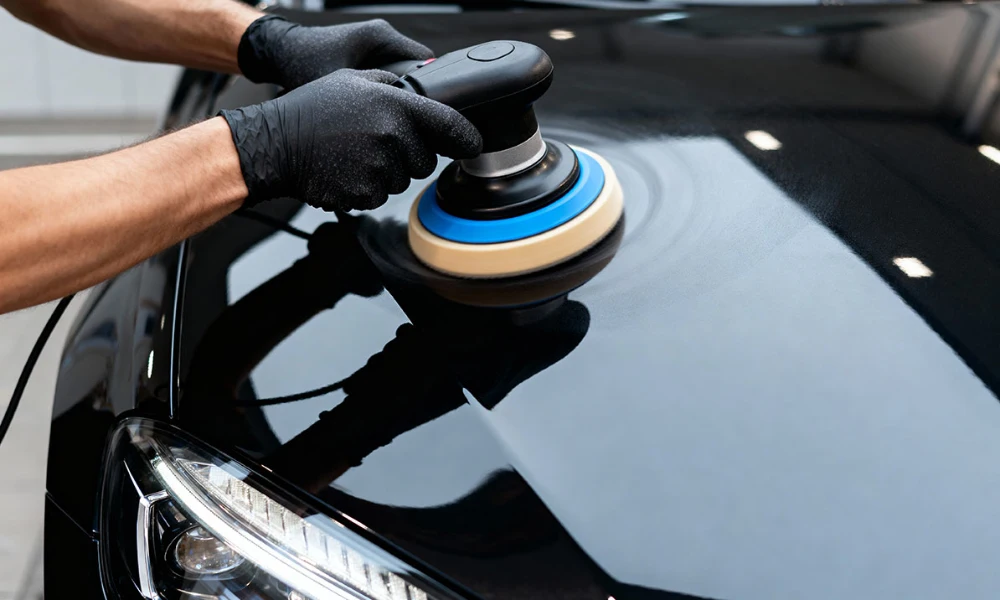
Yet large surfaces along with deeper scrapes respond better to mechanical polishing. Fast results come from using a dual-action device when renewing entire vehicle coatings. Swirl patterns appear less often compared to spinning tools of older types. Control improves while moving across contours during shaping tasks.
Addressing Specific Paint Challenges in Kentucky Weather
Among rolling hills and shifting skies, Kentucky scenery brings more than just sights – it affects what happens to car surfaces over time. Not far from downtown Bowling Green, many observe a gradual fade in surface quality, not clearly tied to age alone. Weather patterns here play a role most do not consider at first glance. Protection begins when awareness of outside influences takes root.
Summer air holds more moisture, which teams up with strong sunlight to speed up surface wear. This mix attacks protective layers by weakening molecular links over time. A quality polish may reduce such effects, bringing back some lost richness to the finish. Though results depend on exposure, earlier treatment tends to limit long-term change.
Protecting Against Humidity and UV Exposure
Day after day under sunlight, a car’s exterior undergoes gradual damage resembling low-intensity scorching. Without a protective sealant layer, pigments begin to dull, then crack appears across panels. Exposure of this kind demands routine shielding – otherwise freshness fades long before age requires it.
Moisture clings to painted surfaces where humidity lingers. When heat shifts occur, that dampness tends to speed up breakdowns in material. Following repair work, a durable sealant forms protection from ongoing climate exposure.
Dealing with Road Grime and Environmental Fallout
Occasionally found on Kentucky roadways, fragments mix with chemical residues that stick to car surfaces. Without attention, such materials slowly wear through protective layers, leaving lasting marks behind. Because of this risk, periodic cleaning helps stop foreign substances from attaching firmly over time. Though overlooked, removal at intervals maintains surface integrity far better than expected.
A surface that feels uneven often signals trapped contaminants beneath. Should grime settle into the finish, a proper automotive cleaner can lift it without harm. With consistent care, protection emerges naturally against daily exposure. The condition of the coating reflects how well it has been maintained over time.
Advanced Paint Correction Methods
A flawless finish begins with knowledge of the vehicle’s clear coat layer. Surface-level flaws respond well to simple polish methods. Yet achieving a reflective result demands careful technique instead of speed. Mistakes often happen without proper equipment or time taken. The outcome depends on precision more than effort applied.
Understanding Paint Thickness and Safety
A reading of your vehicle’s protective layer matters. With a measuring tool, depth becomes visible. Lacking such data risks harm to the surface, which brings high repair expenses.
Once lost, the clear coat does not return. Begin using soft pads along with mild polishes. Safety for the car’s surface comes from understanding boundaries. The finish stays protected when restraint is applied.
When to Seek Professional Auto Paint Restoration Near Me
When harm runs too far, only expert hands manage it well. Signs appear – stiff haze on the surface, cuts that bite into layers. These marks suggest a specialist should step in. A qualified person nearby becomes necessary then.
Should the job demand precision, specialists bring both equipment and experience. Whether a light polish suffices or deeper correction is required, judgment rests with trained eyes. Professional service means protection of surface quality through proper method application. Outcome remains consistent when skilled hands manage material response.
Applying Protective Coatings for Long-Lasting Shine
Shine fades fast if nothing guards it. Last comes protection, first goes luster without it. Cleaning feels lighter once a shield coats the surface. That glossy look sticks around much longer when sealed right.
Benefits of Ceramic Coatings vs Traditional Wax
Most folks pick what shines best. That golden look? Carnauba delivers it – yet you’ll find yourself reapplying every few weeks. Switch to ceramic, though, and suddenly that shine sticks around, lasting years instead.
Here’s what to think about:
- Ceramic Coatings: They resist chemicals and UV rays well.
- Carnauba Wax: It gives a classic look that car fans love.
- Maintenance: Ceramic coatings keep your car clean longer by repelling dirt and water.
- Cost-Effectiveness: Ceramic products may cost more but save time and money in the long run.
Step-by-Step Application for Maximum Durability
Applying the product right is key. Do it in the shade and when the surface is cool. Here’s how to get a top-notch finish:
- Wipe down with isopropyl alcohol to remove oils.
- Put a small amount on a clean microfiber pad.
- Use a cross-hatch pattern to cover evenly.
- Follow the maker’s instructions for flashing or hazing.
- Buff with a new, high-pile towel until it’s clear.
Applying these products right keeps your car looking great for months. Regular care keeps your car’s shine bright all year.
Maintaining Your Like-New Finish After Restoration
After your car’s paint is restored, the real work starts. Professional services make it look new, but keeping it that way is up to you. If you’re still looking for auto paint restoration near me, remember that caring for it every day is key.
Proper Washing Techniques to Prevent New Scratches
Most damage happens when washing your car. Using the wrong tools or methods can ruin your paint. To avoid this, use the two-bucket wash method. It keeps your mitt clean and prevents dirt from scratching your car.
- Fill one bucket with soapy water and the other with clean rinse water.
- Dip your mitt into the soap, wash a section, and then rinse it in the clean water bucket.
- Always use high-quality microfiber wash mitts instead of sponges.
- Dry the vehicle using a clean, plush microfiber towel to avoid water spots.
Routine Maintenance Schedules for Bowling Green Drivers
Bowling Green’s weather can change a lot, from humid summers to cold winters. Keeping up with regular maintenance is crucial. This way, you won’t need to find auto paint restoration near me again soon.
Here’s a seasonal guide to keep your car looking great:
- Spring: Do a deep wash to remove winter salt and dirt.
- Summer: Use a spray sealant to protect against the sun.
- Fall: Check for new chips or scratches before winter.
- Winter: Rinse the undercarriage and lower panels often to stop salt buildup.
Being consistent is the key to a lasting shine. Spend a few hours each month on these tasks. This way, your car will always be a source of pride.
Common Mistakes to Avoid During Paint Restoration
Keeping your car’s exterior safe is rewarding, but only if you avoid common mistakes. Many people start with enthusiasm but lack the right knowledge. Knowing these mistakes helps you get a professional look without harming your car.
Avoiding Over-Polishing and Clear Coat Damage
One big mistake in car paint restoration is using too much polish. The clear coat is thin and can be damaged easily. If you remove too much, your car’s paint can become dull or fail.
Start with a gentle pad and polish. If you’re spending too long on one spot, you’re using too much pressure. Patience is key when fixing scratches or swirl marks.
Why Cheap Products Can Cost You More in the Long Run
It’s tempting to save money with cheap supplies, but it can cost more later. Low-quality polishes may cover up scratches but not fix them. When they wear off, you’re left with the same problem and more.
Buying high-quality items for car paint restoration gives better results and is safer. Cheap towels or pads can scratch your paint. Choosing premium products saves you from the hassle and cost of fixing mistakes.
Conclusion
Getting your car to look like new is very rewarding. It makes you feel proud of your vehicle. Now, you know how to make your car paint shine while fighting off Bowling Green’s weather.
Being patient is key when you’re making your car look new again. Use top-notch tools from Meguiar’s or Chemical Guys. This way, your effort will pay off with amazing results. Keeping up with care will keep your car looking great all year.
Start taking care of your car’s look today. By doing so, you protect its value and beauty for a long time. You’ll feel great driving a car that shows your commitment to quality.
FAQs
In Bowling Green, cars face high humidity and strong UV rays. Paint restoration removes damage from these factors. It keeps your car looking new and increases its value.
Check your paint under sunlight or with a LED light. Swirl marks look like spider webs. Deep scratches feel rough to your fingernail. Knowing this helps you choose the right fix.
Choose a restorer that matches your car’s clear coat and the damage level. Chemical Guys VSS is a good choice. It should remove defects without leaving haze.
Yes, it is! A clay bar removes dirt and fallout that washing can’t. Skipping this can cause more scratches. Use a top-quality kit from Mothers for a smooth surface.
Hand polishing is good for small areas. But, a Dual Action Polisher is better for the whole car. It ensures even results. Start with hand polishing if you’re new.
If your clear coat cracks or you see primer, seek professional help. Shops in Warren County have tools to check paint thickness. It’s safer than risking damage.
Carnauba wax gives a classic look, but ceramic coatings like Gtechniq Crystal Serum Light offer better protection. They last longer and resist UV rays and water.
Use the two-bucket wash method with Griot’s Garage Car Wash. This keeps dirt out. Dry with premium towels to keep your car looking new.